
How to Interpret Your LCA Results

The third Phase of LCA gave you your LCA results. Great! You know the environmental footprint of your product! Now…what does it tell you exactly? The fourth (and last) Phase of LCA is about interpreting these results and gaining the environmental insights you need. So, let’s get into: The goal and process of LCA Interpretation […]
How to define the goal & scope of your LCA
In the Goal and Scope (LCA Phase 1) phase of making a Life Cycle Assessment (LCA) you specify: what, why, how, and for whom your LCA is relevant. It’s a crucial phase in making LCAs, as it determines your outcome and how you interpret and check your results. That’s why you always return to this […]
The most used LCI Databases for Life Cycle Assessment (LCA)
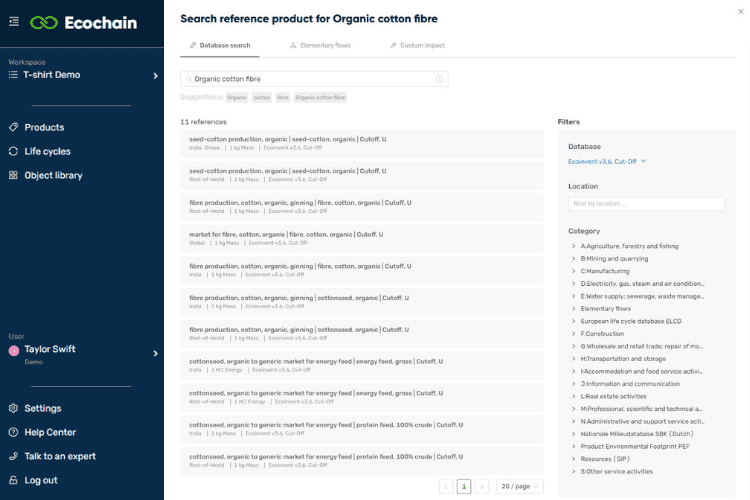
LCI databases are crucial to making Life Cycle Assessments (LCA is the scientific method to measure the environmental footprints of products). LCI databases contain information on the average environmental footprint of most materials and processes used in our daily lives and national economies. They provide environmental data companies can’t or haven’t yet measured themselves yet. […]
End-of-life (EoL) in LCA: Impacts of Waste and Benefits of Recycling
The End-of-Life (EoL) is the 5th product life-cycle phase in LCA: it’s the “grave”. Frightful (at first sight) as its name implies, this phase causes emissions and frowning faces alike. It has two main challenges: 1. How do you find out what happens to your product after it’s discarded? 2. How do you account for […]
Ecodesign Directive for Sustainable Products (ESPR): 2023 Overview

What is the Ecodesign Directive? The EU’s Ecodesign Directive (2009) prescribes energy-related Ecodesign criteria for certain products and communicates this through energy labels. So far, it saved consumers 120 Billion euros of energy expenditure (!!), and lowered energy consumption of the regulated products by 10% in 2021. The Ecodesign Directive is based on the sustainable […]
EU’s Right to Repair: Updates for Product Design
The Right to Repair is a policy movement aiming for longer-lasting products. Right to Repair Legislation can force producers to enable product repairs in various ways. And empower consumers by offering repair information and DIY options. The lifetime of our electronic appliances is generally lower than what they’re originally designed for. This disappoints consumers as […]
Energy Crisis: How to lower your company’s energy bill & environmental impact
With his head in the numbers, Sensorfact’s Founder and CEO Pieter Broekema was the perfect person for us to speak to about how to become energy efficient in your production processes. And deal with the ongoing energy crisis. In the episode: How is the energy crises shifting discourse in companies; How does lowering your […]
CO2 footprint vs. Environmental Footprint of Products: The Main Differences

A product CO2 footprint (or product carbon footprint) tells you how much global warming your product causes throughout its life cycle. But dig deeper – and you find many more environmental crises worth caring about. That’s why next to product CO2 footprints, there are also product environmental footprints. Environmental footprints cover 15+ different impact outcomes […]
What on Earth is a Life Cycle Assessment (LCA)?
Our environmental specialist Emma Thunnissen has dealt with just about everything concerning LCA with our clients. That’s why we thought she was the perfect person for the task of explaining the ins and outs of LCA. In the episode: How does LCA work? What kind of footprint results do you get? How can you use […]
The two types of data in LCA – A Short Introduction.
So what kind of data do you actually need to make a Life Cycle Assessment (LCA) of your products? Think of the energy usage for your manufacturing and waste processes, data on your purchased & used raw materials, etc. Much data can be found in your own finance or purchase department. But with supply chain data (e.g. […]