






Product environmental footprint software for winning tenders – no LCA expertise needed
Win more construction tenders with high‑quality, product‑specific EPDs
Across Europe, especially Benelux, more government contracts and public construction tenders now award points for low‑carbon and product‑level carbon data as standard. Ecochain helps you build a reliable product footprint foundation and generate high‑quality, product‑specific EPDs at scale – so you can answer tender requests fast, with numbers you can defend under scrutiny.
Request your free trial
- ISO 14040
- ISO 14044
- ISO 14067
- EN 15804+A2
Product impact software trusted by construction manufacturers in EU tenders
From EPD bottlenecks to tender‑ready declarations – faster
Whether you’re facing your first EPD requests or scaling to thousands of SKUs, Ecochain gives you a structured way to build a reusable product footprint foundation, generate EPDs, and keep them up to date – without relying on one‑off consultant projects.
Build a reusable product impact foundation for tenders and compliance
Ecochain lets you calculate the environmental impact of your construction products using real manufacturing data – materials, energy, transport and waste. Instead of scattered spreadsheets and static reports, you work with a repeatable product footprint system that feeds tenders, CPR documentation, green building schemes and customer requests from the same data backbone.
- Import BOMs via CSV, Excel or API – no spreadsheet rework
- Link product data to leading LCI databases (e.g. ecoinvent, PEF, World Steel datasets) or any custom database of your choice
- Set goal and scope with guided workflows aligned to regulation and tender expectations
- Manage all product footprint results across plants and product lines in one place
- Scenario modelling to compare product design options and support value‑engineering discussions
- Bring in Ecochain LCA experts when hands-on support is needed
Show the unique environmental footprint of your products – at scale
With Ecochain’s EPD solution for construction building products, you turn a single LCA foundation into verification-ready, product-specific EPDs – without starting from scratch for every new product or mix design. These repeatable workflows help you calculate the exact carbon footprint of products and processes across your facilities, support third-party verification, and scale across your portfolio – instead of relying on one-off studies.
- Get automated GWP and other indicators aligned with EN 15804+A2 and PEF methodology
- Reuse the same data foundation across EPDs, CPR/DoPC documentation and building carbon reporting
- Generate hundreds or thousands of product-specific EPDs across plants and product lines
- Give sales and bid teams a single source of truth for all EPD data
- Track changes in product environmental footprints over time with audit-ready documentation
Make EPD verification a strength in tenders – not a point of failure
In construction tenders and government projects, technical experts often scrutinize EPD assumptions, scope and consistency in detail, so issues raised late can slow bids or undermine confidence. With Ecochain, your EPDs are verification‑ready by design: you verify a factory‑level model once, then generate consistent, product‑specific EPDs across your portfolio from the same verified foundation – so when questions come up, your teams have defensible answers without reworking models or delaying submissions.
- Build reusable models with third-party verification in mind from the start
- Leverage our ‘verify once, pay once, generate many’ approach to keep marginal EPD verification costs predictable as you scale
- Potentially save hundreds of thousands depending on how many verified EPDs you need
- Get pre‑checks from our EPD experts to reduce rework during verification and increase first-time approval rates
- Work with our selected network of experienced EPD verifiers
- Rely on Ecochain EPD specialists when you need expert support
Prepare EPDs in advance – so tenders and government projects don’t create last-minute risk
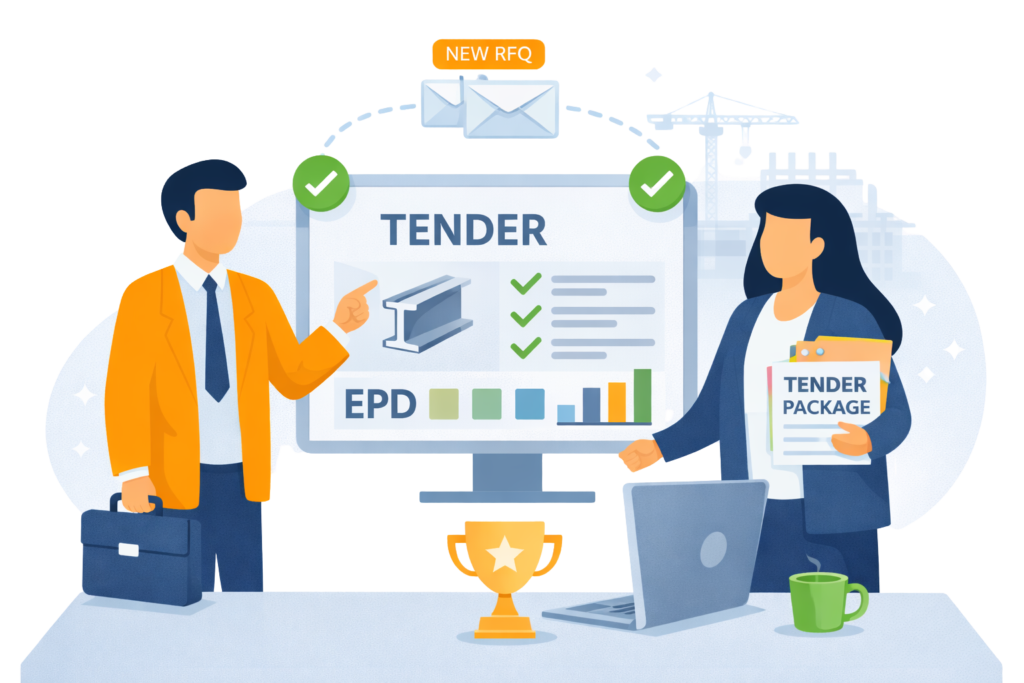
Tender deadlines are fixed, but EPDs and product footprint data are often still being created, updated or verified when bids are due. With Ecochain, the sustainability, R&D and product teams can build and maintain a library of verified, product‑specific EPDs in advance, across your entire product portfolio, so commercial teams can plug them straight into tenders and government contract bids without rushed calculations or risky shortcuts.
- Publish EPDs on demand through recognized program operators – not when time allows
- Get clear links between EPDs and internal product codes or SKUs used in tenders
- Transparent modelling assumptions and documentation at your disposal for technical Q&A and audits
- Sales teams can quickly respond to tenders using pre-approved, product-specific EPDs
- Marketing teams can communicate product impact data with confidence, knowing it’s current and defensible
- Get Ecochain expert support if and where needed
Win Dutch tenders with better MKI scores
In the Netherlands, many infrastructure and building tenders don’t just ask for EPDs – they use MKI (Milieukostenindicator) to compare bids on environmental performance. With Ecochain, you model your products using EN 15804+A2 and the NMD Bepalingsmethode and generate product‑specific EPDs and MKI‑ready data that designers and contractors can plug into DuboCalc and national databases, so you’re not guessing at scores when a tender lands.
- Build LCAs that follow EN 15804+A2 and Dutch NMD Bepalingsmethode, ready for MKI calculations
- Use product‑ and plant‑specific data (not generic averages) to lower MKI scores in Dutch GWW and building tenders
- Export data in formats that can be used via NMD in DuboCalc and national tools for infrastructure tenders
- Reuse the same LCA foundation across EPDs, MKI, and building environmental performance assessments in Benelux
Get expert guidance before you decide.
Our EPD expert hosts a short live session every day focused on EPDs, tender requirements, and compliance with regulations like the CPR. Ask your questions, avoid common mistakes, and get clarity on what’s needed to move forward with confidence.
See how manufacturers use Ecochain EPDs to win tenders
Want to know if the EPD software you’re considering really fits construction manufacturing?
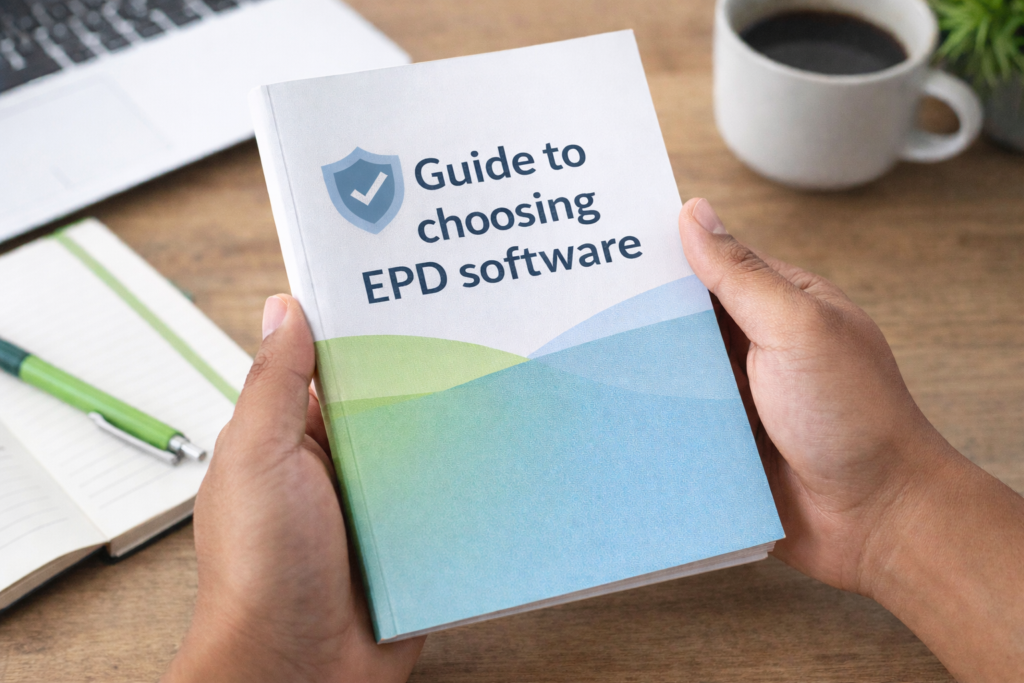
This guide gives you a practical checklist of what to look for in EPD software for construction manufacturers – from EN 15804+A2 alignment and verification workflows to how easily sales can reuse the data in tenders and customer requests.
Read guide: Choosing the right EPD software for construction manufacturers: 7 key factors to consider →
See how Ecochain supports winning a tender with high‑quality EPDs at scale
Talk to our team about your tender pipeline, product portfolio and verification needs. We’ll show you how Ecochain supports product‑specific, high‑quality EPDs at scale – so you can answer tender requirements quickly and credibly, without unpredictable costs.
How the best tender-ready LCA software supports every role in your construction manufacturing team
Ecochain for sustainability teams
From ad‑hoc EPD fire‑drills to a controlled process
If tenders are starting to influence how sustainability work gets prioritized, this may feel familiar. A last-minute request for an EPD. A product variation that suddenly needs product-specific impact data. Questions from sales about whether an existing declaration is ‘good enough’ for this bid. Even when timelines are tight, the expectation for accurate, credible EPDs doesn’t change.
Ecochain gives you a structured way to model all your products at once, at portfolio or factory level. From that foundation, you calculate the product environmental footprint for each and generate high‑quality, verifiable EPDs whenever the business needs them – without rebuilding from scratch for every tender.
Ecochain for sales and marketing teams
Remove EPD risk from tender bidding
In construction tender bidding – especially for public and government projects – environmental documentation faces growing scrutiny. Sales and marketing teams need to submit credible tender packages and communicate impact claims with confidence, without second-guessing whether an EPD will hold up under review. When product-specific data is unclear or outdated, risk creeps into bids and timelines tighten.
With Ecochain, sustainability teams maintain reliable product impact data and verified EPDs, so sales and marketing can focus on winning work. Environmental declarations generated in Ecochain stand up to tender review and public scrutiny, allowing CPR, CSRD and related requirements to support tender success instead of slowing it down.
Ecochain for executive and compliance leaders
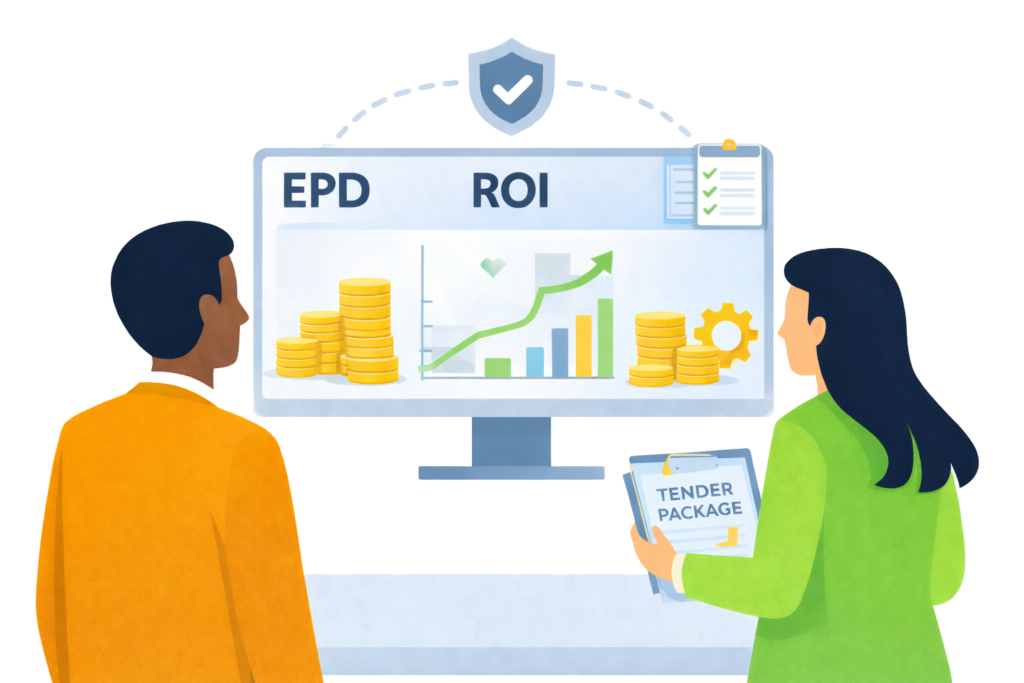
Scale EPD coverage without losing control of cost or risk
In markets where construction tenders increasingly decide who wins the work, environmental documentation directly affects revenue. When EPD coverage is limited, slow to produce, or hard to defend, bids get weaker – or opportunities are missed altogether.
Ecochain gives your team a scalable way to turn product carbon footprints and EPDs into a commercial asset: predictable cost, more complete tender coverage, fewer deals lost due to documentation gaps, and lower regulatory and reputational risk.
Trusted and approved by leading EPD program operators
Frequently asked questions
Do I need EPDs to win construction tenders?
In many European markets, public and private construction tenders increasingly expect product‑specific, third‑party verified EPDs as part of the sustainability or carbon scoring. While not every tender makes them formally mandatory yet, having current EPDs that follow EN 15804 and ISO 14025 greatly improves your chances of qualifying and scoring well.
What makes a ‘high‑quality’ EPD for tenders?
For tenders, a high‑quality EPD is Type III, based on EN 15804 / ISO 14025, third‑party verified, and clearly product‑specific (often even plant‑specific). It should be up to date (usually valid 5 years), show transparent system boundaries and modules (at least A1–A3, sometimes A4–A5), and be published by a recognized program operator.
Continue reading: Environmental Product Declaration (EPD) – The complete guide
What’s the difference between generic and product-specific EPDs?
Generic EPDs often use industry‑average data and locked datasets across your entire product line, and are useful for early design, but they rarely reflect your actual product or factory performance. Product‑specific EPDs are based on your own materials, processes and energy, and are increasingly preferred – or explicitly required – in tenders and green building certifications.
Continue exploring: Create, verify and publish accurate EPDs at scale
How fast can we generate verification‑ready EPDs with Ecochain?
Most construction manufacturers generate their first verification‑ready, product‑specific EPDs within about a week of completing their LCA foundation setup in Ecochain (data structure and modelling). The total time to a published EPD depends mainly on how quickly you can supply data for LCA calculations and how fast your chosen programme operator or verifier completes their review.
Keep exploring: Create, verify and publish accurate EPDs at scale
Can Ecochain EPDs be used in government tenders and public contracts?
Yes. Ecochain supports EN 15804‑based, third‑party verified EPDs that can be used as evidence in bids for government contracts and public construction tenders, as long as you follow each contracting authority’s rules. Customers use Ecochain EPDs in construction tenders in the UK, Scotland, Germany, the Netherlands and other countries, as well as on national and regional platforms like Public Contracts Scotland or Dutch tenders listed on TenderNed, where specifications call for current, product‑specific EPDs.
Ready to win more tenders with high‑quality, product‑specific EPDs?
Reach out to see how Ecochain software for construction manufacturing can help you generate, verify and manage EPDs at scale – so you stay competitive in a market where carbon and transparency increasingly decide who wins.
Sem Dijkshoorn