






LCA software built for CPR compliance
Be ready for CPR, CE marking, DPP and what comes next
Construction Products Regulation (CPR) is rolling out in phases, but the direction is clear: verified environmental data, digital declarations and full lifecycle transparency are becoming standard for construction products.
Ecochain helps you put the right product footprint foundation in place now, so you can meet CPR requirements today and scale toward digital product passports without rebuilding your data later.
Request your free trial
- ISO 14040
- ISO 14044
- ISO 14067
- EN 15804+A2
EPD software solution supporting CPR and EU compliance, trusted by construction manufacturers across Europe
Build a CPR-ready product impact foundation that scales over time
Whether you’re preparing for CPR updates, facing CE marking changes, or planning to align with upcoming digital product passport (DPP) requirements – Ecochain gives you a structured way to get your product footprint data ready and scale over time, with expert support available.
Create a product footprint foundation that supports CPR compliance, CE marking and what’s next
Ecochain lets you generate scalable and credible environmental impact results for construction products using your actual manufacturing data. You move away from spreadsheets, manual calculations and one-off consultancy projects, and toward a repeatable way of producing CPR-aligned outputs that hold up under review.
- Import BOMs via CSV, Excel or API – no spreadsheet rework
- Connect product data directly to environmental databases (e.g., ecoinvent, PEF or World Steel datasets)
- Set goal and scope with guided workflows aligned to CPR requirements
- Get reliable impact results for construction products like concrete, steel, timber, insulation or flooring
- Build reusable product data that can feed CE marking, tenders, DPPs and building carbon reporting
- Manage product footprint results across products and sites in one place
- Bring in our LCA and EPD experts when you need support or want us to handle it
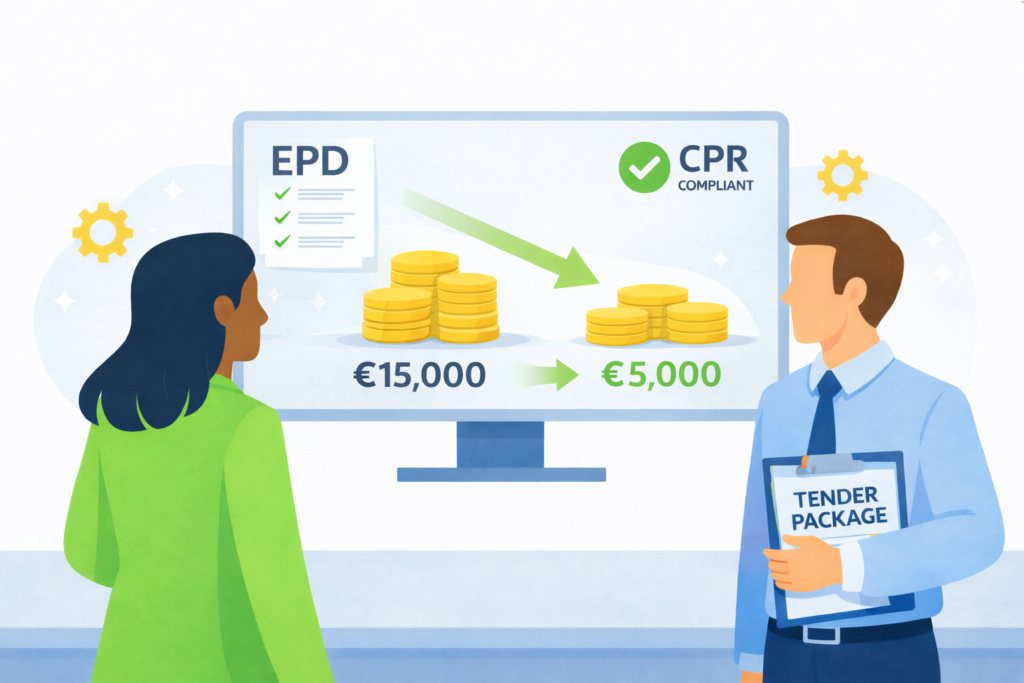
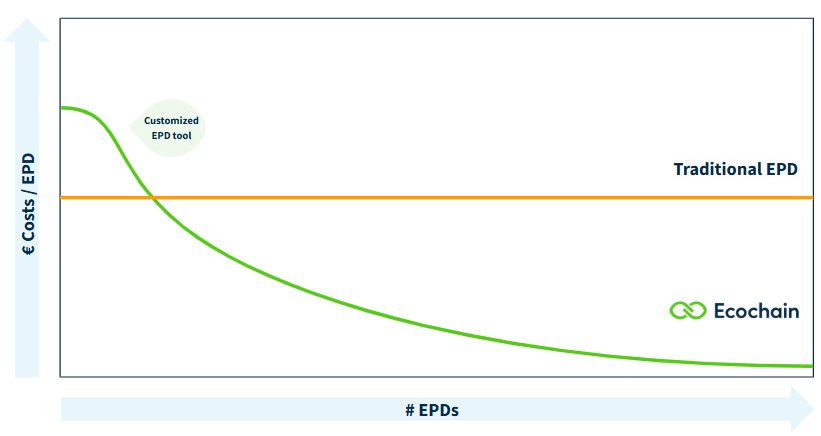
Generate CPR-aligned EPDs at scale – without per-product verification costs
With Ecochain’s EPD solution for construction products, you remove the bottlenecks between data setup and publish-ready digital declarations. You set up and verify your CPR-ready LCA foundation once, then generate verified, product-specific EPDs at scale – without one-off consulting projects or manual spreadsheets.
- Get automated GWP calculations aligned with EN15804+A2 and emerging CPR requirements
- Generate hundreds or thousands of EPDs at the highest quality level
- Get pre-checks from our EPD experts to increase first-time approval rates
- Verify once, pay once model – no per-product verification costs
- Publish on demand to ECO Platform via EPD International, NMD, EPD Global, IBU or other program operators
- Track what changed in your results, when and why – audit-ready documentation
- Stay on top of CPR, EPBD and CBAM requirements automatically
Get ready for Digital Product Passports – without rebuilding later
Digital Product Passports (DPP) for construction products are coming. While the exact format and timelines are still being finalized, manufacturers will need structured, machine-readable product data – with environmental performance from EPDs forming a core part of what will be required. With Ecochain, you set up a CPR-ready LCA foundation that already follows this logic, so when DPP requirements take effect, your data is ready to integrate – without rushed rework or last-minute restructuring.
- Machine-readable declarations from day one – so you're not rebuilding documentation later
- EPDs generated with Ecochain already provide a large share of the environmental data expected in future DPPs
- Structured environmental data designed to integrate with future DPP systems
- A foundation you can reuse as DPP requirements mature
Get expert guidance before you decide.
Our EPD expert hosts a short live session every day focused on EPDs, tender requirements, and compliance with regulations like the CPR. Ask your questions, avoid common mistakes, and get clarity on what’s needed to move forward with confidence.
See real impact from manufacturers using Ecochain LCA software for EPD generation
Still figuring out Construction Products Regulations requirements?
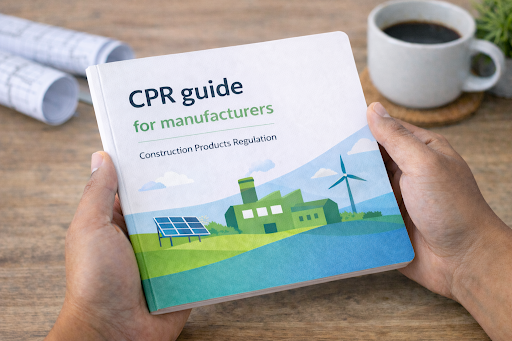
We’ve built a guide that walks you through what CPR requires, what’s changing in 2024–2032, and how to build a data foundation that works for CPR, tenders, customer requests and future DPPs, without rework.
Read guide: What manufacturers need to know about CPR 2024–2032 →
See how Ecochain supports CPR construction compliance across your product portfolio
Talk to our team about your CPR timeline, product portfolio and verification needs. We’ll show you how Ecochain supports product-specific, digital environmental declarations aligned with CPR – at scale, without rising costs or shortcuts that put credibility at risk.
How the best CPR-ready LCA software supports every role in your construction manufacturing team
Ecochain for sustainability teams
From CPR and EPD bottlenecks to something you control
CPR, EPDs, CE marking for construction products, digital product passports – it all seems to land on your desk at once, often without clear timelines or complete data. One week it’s the sales team asking for a CPR-aligned EPD, the next it’s the leadership asking whether the company’s ready for what’s coming in sustainability in 2026 and beyond.
Ecochain gives you a way out of reactive firefighting: a structured product footprint foundation you can trust, reuse and scale. You define scope once, connect your data, and generate CPR-aligned EPDs when you need them – so you stay credible under evolving EU regulations without spending your time untangling spreadsheets or explaining delays.
Ecochain for sales and marketing teams
Remove CPR and EPD risk from tenders
As CPR requirements tighten, environmental data can quietly become a risk in tenders and communications – outdated EPDs, DoPs, unclear scope, or numbers that don’t quite match the product being sold.
With Ecochain, sustainability teams put a reliable, CPR-aligned data foundation in place, so sales and marketing aren’t left second-guessing what’s safe to share. You know the EPDs are product-specific, verified and up to date, so tender responses move faster and marketing can communicate environmental performance with confidence – without worrying about being challenged by customers, auditors or regulators.
Ecochain for executive and compliance leaders
Scale portfolio-wide EPD coverage while keeping regulatory risk under control
Under CPR, environmental performance needs to be declared across your construction product portfolio wherever harmonised rules require it – not just for flagship products – but traditional consulting models usually don’t support that at scale.
With Ecochain, you verify your factory-level environmental impact foundation once, then generate product-specific, CPR-aligned EPDs across your portfolio at a predictable marginal cost. When results are challenged under CPR, in tenders or by auditors, your teams can rely on defensible, product-level data tied to how products are actually made – reducing regulatory and reputational risk while keeping spend under control.
Trusted and approved by leading EPD program operators
From €50 per EPD – without sacrificing quality and accuracy as you scale
Frequently asked questions about CPR-compliant product declarations
What's the difference between Construction Products Regulation (CPR) and Digital Product Passport (DPP)?
Construction Products Regulation (CPR) is the law that sets the framework for what performance – including environmental indicators – must be declared for construction products, and under which conditions they can be CE marked. A Digital Product Passport (DPP) defines how that data will be stored and shared – in machine-readable, traceable, auditable formats.
- CPR is the EU regulation that sets the rules for placing construction products on the market: what you must declare (performance, and increasingly environmental performance), how you test, and when you can use CE marking.
- DPP is a structured digital record that carries all key information about a product (technical data, DoP/DoPC, environmental indicators, instructions, IDs) through its life cycle and makes it easily accessible (e.g. via QR code). DPPs rules for construction products are still being finalized by the European Commission. Many expect mandatory use to start roughly 18+ months after the relevant delegated acts are published, which is currently anticipated around the later 2020s..
Ecochain helps you organize your environmental data now in DPP-ready formats. That way, when the regulations land, you’re not rebuilding everything from scratch. You’re just integrating data that’s already structured correctly.
Continue reading: What construction product manufacturers need to know about CPR 2024–2032 →
How fast can we generate our first CPR-compliant EPDs with Ecochain?
Most construction product manufacturers generate their first verification-ready EPDs within a week of completing their LCA foundation setup in Ecochain.
The total timeline from onboarding to publication depends on factors outside the software – like how quickly you can gather supplier data and product specifications, and how quickly an independent verifier can review the EPDs. What is within Ecochain’s control is speed and scale: once your foundation is in place, generating CPR-aligned EPDs takes days, not months – whether you’re producing 10 EPDs or 1,000.
Continue exploring: Create, verify and publish accurate EPDs at scale
Do we actually need EPDs to be CPR compliant?
Environmental Product Declarations based on EN 15804 are the most practical, widely accepted way to meet CPR’s environmental reporting requirements.
In practice, construction manufacturers use EPDs because they provide verified, standardized environmental data that serves multiple purposes: CPR compliance, tender submissions, customer requests, even ESPR alignment. One verified declaration. Multiple uses.
That efficiency is why EPDs have become the de facto compliance tool.
Continue exploring: Create, verify and publish accurate EPDs at scale
What happens if we don’t comply with CPR?
If your construction products need to declare environmental performance under CPR (phased in from 2026) and your underlying data/EPD doesn’t meet CPR standards like EN 15804, you can’t legally affix the CE mark or issue compliant DoP/DoPC for those products.
Simple consequences:
- Market access blocked: EU importers/distributors can’t sell your products legally without valid CPR documentation.
- Fines/penalties: Member states can impose significant financial penalties for non‑compliance once standards are updated and requirements apply to your product family.
- Product withdrawal: Authorities can recall/block your goods at borders or from shelves.
Timeline note: CPR environmental requirements only become mandatory per product group when harmonised standards are updated (starting 2026 for GWP, staggered). Use EN 15804-compliant EPDs now to be future-proof.
What CPR documents do construction product manufacturers need?
For legal EU market access (CPR compliance) you need two key documents on every product (affixed/available before sale):
- CE mark on the product/packaging (signals conformity).
- Declaration of Performance (DoP) or Declaration of Performance and Conformity (DoPC) – a document declaring your product’s performance against relevant standards (strength, fire, etc., plus environmental data from 2026). Must be available electronically on your website.
For tenders and customers:
- The above CPR docs (mandatory)
- Environmental Product Declaration (EPD) – increasingly required in tenders (EN 15804-compliant, shows GWP/carbon footprint). Not legally required by CPR yet, but essential for public/private projects.
- Technical datasheets and test reports (back up your DoP claims).
Ready to stay CPR compliant and build your product impact data foundation for what's next?
Reach out to us to see how Ecochain software for construction manufacturing can help you win tenders, support CPR requirements and build a sustainable future.
Sem Dijkshoorn