Summary (TL;DR) of what this post covers
- An EPD program operator (PO) is the independent body that sets the rules for your EPD, approves the verifier, and publishes the final result. No recognized PO, no valid EPD.
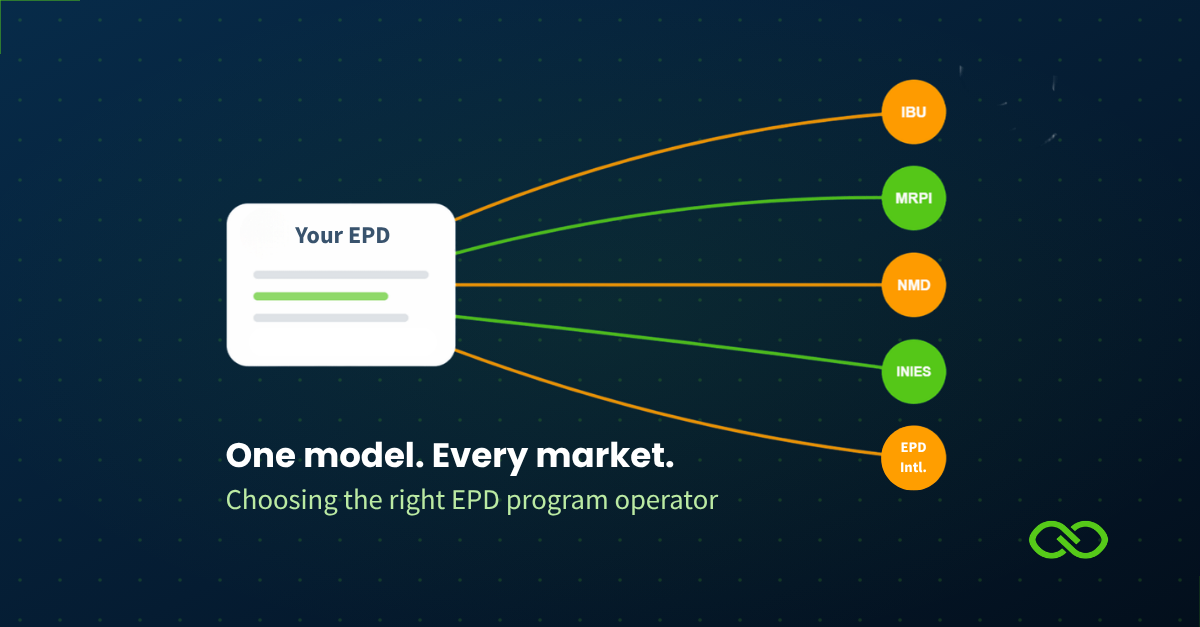
- Which PO you need depends on where you sell, not what you’d prefer. Germany runs mostly on IBU, the Netherlands runs on MRPI and NMD, France is almost entirely INIES, and most manufacturers selling across borders end up needing two or three operators, not one.
- Mutual recognition between operators exists (publishing in one makes the EPD available in another PO) that shortens the process sometimes. It doesn’t cover every product category, so check rather than assume.
- The total publication cost rarely comes from the EPD program operator itself. It comes from software that only knows how to publish through one, forcing you to rebuild your LCA model every time a new market or tender asks for a different operator.
- This guide walks through the major EPD program operators, how to pick the right ones for your markets, the red flags that point to a locked publishing setup, and the questions worth asking any LCA vendor before you commit.
What does an EPD program operator actually do?
An EPD program operator (PO) is the independent organization that manages the EPD process for a specific region, sector or standard. It writes the detailed rulebook, called the Product Category Rules (PCRs), approves the verifiers who check your work, and runs the public database where your finished EPD lives once it’s approved. Without registration through a recognized PO, an EPD isn’t valid, no matter how solid the underlying LCA is.
Most operators build on the same standards – ISO 14025 and EN 15804, which makes reports available on them recognized across Europe. The information they require is also largely similar although it varies for certain POs. So, the publication methodology doesn’t swing wildly between them. What changes is where the resulting EPD is recognized, how fast it moves through verification, and which local rules get layered on top, like the Dutch Bepalingsmethode for anything feeding into NMD.
Most manufacturers often don’t research EPD program operators before they need one. A tender comes up, a German customer asks a pointed question, or a CPR deadline stops being an abstract 2026 problem and becomes a Tuesday problem. That’s usually the first time IBU, EPD International, MRPI, NMD, EPD Hub, EPD Global and a handful of other acronyms show up on the same page, and it’s easy to assume the job is picking a favorite.
But actually, it isn’t. You’re figuring out which platform your buyers, regulators and verifiers already trust in a specific market. Get that part right and the rest of the process is a lot less intimidating than the acronym soup suggests.
What are the different EPD program operators?
There are a handful of EPD program operators that help you publish your verified EPDs in Europe:
| EPD program operator | Where they operate | Established under ECO Platform | What to know |
| EPD International (International EPD System, run via Environdec) | Broad international reach, strong in Spain, Sweden and the UK | Yes | The closest thing to a global default if your buyers span several countries |
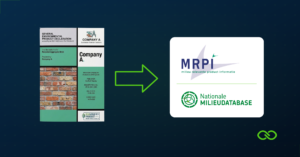
| MRPI | Netherlands | Yes | The Dutch EPD program operator that actually issues the EPD certificate, following EN 15804 and the Bepalingsmethode. Publishing with MRPI is the direct route into NMD |
| Nationale Milieudatabase (NMD) | Netherlands | No (runs its own verification protocol) | The database that Dutch building assessors query for MPG and MKI calculations. It can accept EPDs from MRPI or other operators like EPD Global, EPD International or IBU, but only once they’ve passed NMD’s own verification protocol on top. A verified environmental report that isn’t in NMD is effectively invisible to Dutch construction buyers, even if it’s valid elsewhere |
| IBU (Institut Bauen und Umwelt) | Germany | Yes | Covers the large majority of published EPDs in the German construction market. If Germany is a core market, this one is not really optional |
| INIES | France | No (since 1 Jan 2025) | Covers the large majority of the French market |
| EPD Hub* | Global | Yes (only since December 2025) | Built for automated, large-scale publishing at fixed cost. |
| EPD Global (formerly EPD Norge), EPD Denmark, EPD Ireland and other national operators | (Mainly) Norway, Denmark, Ireland | Yes | Often dominant locally, north of 80% share in some markets, and less relevant the moment you sell outside that market |
*EPD Hub – this is the PO created by OneClickLCA. While it’s fast and standardized, you get locked into an ecosystem with no repeatability for other POs.
Several of these operators have mutual recognition agreements through umbrella bodies like ECO Platform, which can mean an EPD registered with one gets co-published with another without a full second verification. Whether that applies depends on the product category and the specific agreement in place, so it’s worth confirming rather than assuming it covers you.
How to choose the right operators for your markets: A quick checklist to get started
Each operator holds legitimacy in a specific market, and your decision should follow that market, not a preference. You need to base it on:
- Where your buyers and regulators actually sit.
A manufacturer selling into Germany and the Netherlands doesn’t get to pick one PO and call it settled. That’s very likely two operators, not one. - What tenders and customers explicitly name.
If a tender cites IBU by document number, that’s your answer, no further debate needed. - Whether mutual recognition covers your product category.
Sometimes it shortcuts the process, most times it simply doesn’t apply. - Turnaround time and verifier availability.
These vary more than most buyers expect, and a slow verifier can quietly threaten a tender deadline.
For most manufacturers selling across more than one market, the honest question sounds less like „which EPD program operator“ and more like „which combination, and in what order.“
Before you go with with a particular PO, work through this list:
- List every country you currently sell into, plus any on the roadmap for the next 12 months.
- Check whether any tenders or customers have named a specific EPD program operator. If so, that’s settled, move on.
- Map each remaining market to its dominant operator, using the table above as a starting point.
- Check for mutual recognition between the operators on your list, and confirm it actually covers your product category.
- Confirm your chosen operators, or your LCA platform, have verifiers available for your product type, and ask about realistic turnaround.
- Only then start building your LCA model, scoped to satisfy the strictest operator on your list first.
What to look out for after you’ve already chosen an EPD program operator
You did your homework. IBU for Germany, MRPI and NMD for the Netherlands, decision made. Here’s where it can get frustrating: plenty of LCA software was built to output cleanly into exactly one EPD program operator’s format, because that’s what the vendor’s original customer base needed. Ask the same tool to also publish through a second or third operator, and you’re often re-entering data, rebuilding parts of the model, or paying for a verification process that has nothing to do with your product actually changing.
The EPD program operator you picked was the right call. The software that only speaks one operator’s language ends up being the actual bottleneck, and it’s the one that quietly costs the most time.
Important note: it’s worth asking any LCA software vendor where you’re actually allowed to publish, and who handles verification once you get there. Some tools tie you to a single EPD program operator or their own proprietary hub, which narrows where your EPDs get recognized and leaves you to find your own verifier for each new operator. The ability to publish through the operators your specific markets require, whether that’s EPD International, MRPI, NMD, IBU or others, keeps that choice with you instead of your vendor.
Continue reading: How to choose the right LCA software that grows with your manufacturing business
Red flags that point to a locked setup between an EPD program operator and an LCA/EPD platform
A few signs are worth pausing on before you commit to an LCA platform and EPD program operator combination:
- Publishing tied to one EPD program operator or the LCA software vendor’s own hub.
This narrows where your declarations are recognized and quietly hands the LCA software vendor control over a decision that should be yours. - A second PO means rebuilding the model.
If adding an operator forces you back to square one on data entry, the LCA tool wasn’t built for manufacturers selling across more than one market. - Verification priced per product, per operator.
Costs that climb in a straight line with every new market or product don’t scale the way your portfolio will. - No visibility into what changes between operator formats.
If you can’t see what’s being reformatted or reused, you can’t judge how much duplicate work you’re actually paying for. - Vague answers about specific operators.
An LCA software vendor who can’t speak concretely about IBU, MRPI, NMD or EPD International probably hasn’t published through them at real volume.
None of these automatically rule a tool out, but each deserves a straight answer before you sign anything.
Questions to ask an LCA software vendor about EPD program operator flexibility
Bring these into a sales conversation with an LCA software provider:
- Which EPD program operators can I publish through, and is that list fixed or does it grow with my needs?
- If I need to add a second operator next year, do I rebuild the model or reuse what already exists?
- Is verification handled per product per operator, or can I verify once and publish across formats?
- Do you have your own verification partners, or am I sourcing a verifier myself for each operator?
- Do you have manufacturers currently publishing through the specific operators my markets require?
- If I switch LCA platforms later, do I keep and export the underlying model, or just the finished EPDs?
What does a good publishing experience for your verified EPD through recognized POs look like?
This is where a good life cycle assessment platform matters more than any single EPD program operator. A setup worth keeping should let you build the LCA model once, using your real production data, and then generate outputs formatted for whichever operator the moment calls for, whether that’s IBU, MRPI, NMD, EPD International, EPD Global, EPD Hub or another your market requires. Adding a second or third operator later shouldn’t mean starting the modeling work over, and verification costs should track what actually changed in your product, not what format you happen to need this quarter.
Verification is worth a closer look too. As a founding member of ECO Platform, Ecochain works alongside verification partners across the major operators, so you’re not left sourcing and briefing a new independent verifier every time a new market comes up. That support sits inside the same platform you’re already modeling in, not a separate project you have to manage on the side.
This is exactly what we built Ecochain’s LCA automation platform around. You model your product once, then export and publish to ECO Platform through whichever EPD program operator your customers or regulations require, with verification support built in, without rebuilding anything when a new market comes into play. If it’s useful, we’re glad to walk through your specific market mix with you.
Talk to our team, or take a closer look at Ecochain’s EPD software.
Frequently Asked Questions (FAQs)
Do I need to register with more than one EPD program operator?
You often need to register with more than one program operator. Manufacturers selling across a few countries rarely get away with one operator. Most end up registering with two or three over time, driven by where their buyers and regulations sit rather than by preference.
Is an EPD from one EPD program operator valid in another country?
Yes, sometimes an EPD from one EPD program operator can be valid in another country through mutual recognition agreements between operators, but it depends on the product category and the specific agreement in place. Confirm it for your product rather than assuming it applies.
Which EPD program operator is cheapest?
It varies by operator, product category, and whether verification happens per product or once at the facility level. Cost differences are real, but they shouldn’t outrank what your buyers actually require.
How long does EPD verification usually take?
The EPD verification duration depends on the operator, how complete your data is, and verifier availability. Rebuilding a model from scratch for each new operator adds weeks that a reusable model setup avoids entirely.
Can I switch EPD program operators after my first EPD is published?
Yes you can switch EPD program operators after your first EPD is published, though it typically means a new registration and verification with the new operator. A reusable underlying LCA model makes that switch far less painful than starting from zero.
What’s the difference between an EPD program operator and a database like ecoinvent?
An EPD program operator manages the EPD process, verification and publication. A database like ecoinvent supplies background environmental data used inside your LCA model. Both matter, but they do different jobs entirely.
Does CPR require a specific EPD program operator?
No, the revised Construction Products Regulation (CPR) sets requirements for what environmental information needs to appear in your Declaration of Performance, starting with Global Warming Potential from EN 15804+A2. It doesn’t mandate a single operator, so the choice still comes down to where you sell and what your buyers and tenders ask for.